

Strong teams do not happen by chance. You build them with effort, trust, and shared experiences. That is where team building activities and games play a powerful role. They help people connect, communicate, and work better together.
In today’s fast-paced work environment, teams often work under pressure. Deadlines, targets, and responsibilities can create stress and disconnect. When you introduce fun and purposeful activities, you break these barriers. You create a space where team members feel comfortable, valued, and motivated.
Here, you will explore 21 of the best team-building activities and games that improve collaboration, boost morale, and strengthen workplace relationships.
Team Building Activities and Games (Need)
Every organization wants high performance, but performance depends on people. When team members do not communicate well or trust each other, productivity drops. This is why team booster activities are not optional—they are essential.
These activities help in many ways. First, they improve communication. Team members learn how to share ideas clearly and listen actively. Second, they build trust. When people work together in a relaxed setting, they feel more comfortable relying on each other.
Team building games also improve problem-solving skills. Many activities challenge teams to think fast and work together under pressure. This prepares them for real workplace challenges. In addition, these activities boost morale. When employees enjoy their work environment, they stay motivated and engaged.
In simple terms, team building activities and games create stronger, happier, and more productive teams.
21 Best Team Building Activities and Games
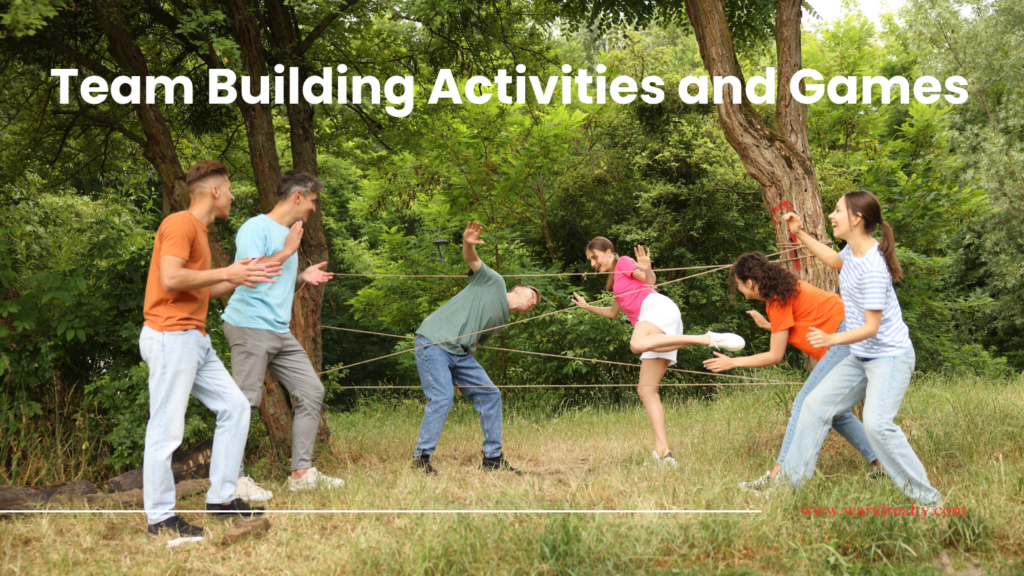
1. Escape Room Challenge
The escape room challenge is one of the most effective team building activities because it combines problem-solving, communication, and time pressure. In this activity, teams enter a themed room filled with puzzles, hidden clues, and locked objects. The goal is simple: solve all challenges and escape before time runs out. However, success depends on how well team members collaborate.
Each person brings a different perspective. Some notice patterns, while others connect clues faster. Teams must share information clearly and avoid working in isolation. This activity also highlights leadership and decision-making under pressure. When time is limited, teams must prioritize tasks and act quickly.
You can organize this activity in physical escape rooms or create a DIY version in the office. Both options deliver strong results. This game builds trust and encourages teams to rely on each other. It also creates excitement and keeps participants fully engaged.
People required: 4–8 per team
Time: 45–90 minutes
2. Marshmallow Tower Challenge
The marshmallow tower challenge is a simple yet powerful team building game that tests creativity and teamwork. In this activity, teams receive limited materials such as spaghetti sticks, tape, string, and one marshmallow. The goal is to build the tallest free-standing structure with the marshmallow placed at the top.
At first, teams often focus on planning, but they quickly realize that testing ideas matters more than perfect designs. This activity teaches teams to prototype quickly and learn from failure. When structures collapse, teams must adapt and try again.
Communication plays a key role. Teams that share ideas openly perform better than those that work individually. This game also highlights leadership and resource management. It shows how teams handle pressure and time constraints.
You can use this activity in offices, classrooms, or workshops. It creates energy and encourages participation from everyone. Most importantly, it shows that simple challenges can reveal valuable lessons about teamwork and innovation.
People required: 3–5 per team
Time: 20–30 minutes
3. Egg Drop Competition
The egg drop competition is a creative and fun team booster activity that encourages innovation and problem-solving. In this game, teams design a protective structure to prevent an egg from breaking when dropped from a height. Teams can use materials like paper, straws, tape, and cardboard.
The challenge pushes teams to think about design, cushioning, and impact resistance. They must discuss ideas, test concepts, and make quick decisions. This activity builds collaboration because every team member contributes to the design process.
It also introduces risk management. Teams must predict what might go wrong and plan accordingly. When the egg survives, it gives a strong sense of achievement. Even if it breaks, teams learn valuable lessons.
This activity works well in both indoor and outdoor settings. It creates excitement and friendly competition. Participants stay engaged throughout the process and enjoy the final testing phase.
Overall, this game strengthens teamwork, creativity, and practical thinking.
People required: 3–6 per team
Time: 30–60 minutes
4. Puzzle Race
A puzzle race is a fast-paced team building game that improves coordination and efficiency. In this activity, teams compete to complete a jigsaw puzzle before others. While the task seems simple, it requires planning and teamwork.
Teams must decide how to divide the work. Some members can sort pieces by color or edges, while others start assembling sections. This division of roles helps teams work faster and smarter. Communication is essential because team members must stay aligned.
The activity also teaches time management. Teams must stay focused and avoid distractions. It highlights how well a team works under pressure and how quickly they adapt to challenges.
You can use puzzles of different difficulty levels based on your team size and experience. This activity suits both small and large groups.
The puzzle race creates healthy competition and keeps participants engaged. It also reinforces the importance of collaboration and strategic thinking in achieving common goals.
People required: 2–4 per team
Time: 20–40 minutes
5. Minefield Game
The minefield game is a powerful trust-building activity that focuses on communication and leadership. In this game, you place objects randomly on the floor to create a “minefield.” One participant walks through the area blindfolded, while teammates guide them using only verbal instructions.
The blindfolded participant must rely completely on their team. This builds trust and strengthens relationships. At the same time, team members learn how to give clear and precise instructions.
This activity highlights communication gaps. If instructions are unclear, mistakes happen. Teams quickly understand the importance of clarity and patience.
It also develops leadership skills. One person often takes charge of guiding the participant, while others support with suggestions.
The game works well in both indoor and outdoor environments. It is simple to set up and highly engaging. Overall, the minefield game improves trust, listening skills, and teamwork in a practical and memorable way.
People required: 6–12
Time: 20–30 minutes
6. Survival Scenario Challenge
The survival scenario challenge is a highly engaging team building activity that improves decision-making and critical thinking. In this game, teams imagine they are in a survival situation, such as being stranded in a desert or jungle. They receive a list of items and must rank them based on importance for survival.
Teams must discuss, debate, and agree on priorities. This process encourages open communication and active participation. Each member shares their viewpoint, and the team must reach a consensus. This builds collaboration and negotiation skills.
The activity also highlights leadership. Some team members naturally guide discussions, while others contribute ideas. It shows how teams handle disagreements and make decisions under uncertainty.
You can later compare team answers with expert recommendations. This adds learning value and sparks discussion. The activity keeps everyone involved and encourages logical thinking.
Overall, this game strengthens teamwork, problem-solving, and decision-making skills in a fun and interactive way.
People required: 4–8 per team
Time: 30–45 minutes
7. Blindfold Navigation
Blindfold navigation is a simple yet powerful team building game that focuses on trust and communication. In this activity, one participant wears a blindfold while teammates guide them through a path using only verbal instructions.
The blindfolded person must trust their team completely. This builds confidence and strengthens relationships. At the same time, team members must communicate clearly and effectively.
The activity highlights how small misunderstandings can lead to mistakes. Teams quickly learn to give precise directions and listen carefully. It also encourages patience and support among members.
You can create different paths with varying difficulty levels. This keeps the activity interesting and challenging. It works well in both indoor and outdoor settings.
This game is easy to organize but delivers strong results. It improves trust, communication, and teamwork in a practical and memorable way.
People required: 6–10
Time: 15–25 minutes
8. Two Truths and a Lie
Two truths and a lie is a classic icebreaker that helps team members connect on a personal level. In this activity, each participant shares two true statements and one false statement about themselves. The rest of the group must guess which one is the lie.
This activity creates a relaxed and fun environment. It encourages people to open up and share interesting facts. Team members learn more about each other beyond work roles.
The game also improves listening and observation skills. Participants must pay attention to details and body language to identify the lie. It sparks conversations and laughter, which helps reduce workplace stress.
You can use this activity at the beginning of meetings or team sessions. It works well for both new and existing teams.
Overall, this game strengthens relationships, improves communication, and builds a positive team culture.
People required: 5–15
Time: 15–30 minutes
9. Human Knot
The human knot is a fun physical activity that improves teamwork and coordination. In this game, participants stand in a circle and randomly hold hands with others. The group must untangle themselves without letting go of hands.
This activity requires patience and collaboration. Team members must communicate clearly and move carefully. Everyone must work together to solve the problem.
The game highlights leadership and problem-solving. Some participants guide the group, while others follow instructions. It shows how teams manage confusion and find solutions.
This activity also builds trust and breaks barriers. Participants interact closely, which helps improve bonding. It creates a fun and energetic environment.
You can use this game in workshops, offices, or outdoor events. It is simple to organize and highly engaging.
Overall, the human knot strengthens communication, teamwork, and coordination in a fun way.
People required: 6–12
Time: 15–20 minutes
10. Back-to-Back Drawing
Back-to-back drawing is an effective communication-based team building activity. In this game, two participants sit back-to-back. One person describes an image, while the other draws it without seeing the original.
This activity highlights the importance of clear communication. The person describing must use precise and simple instructions. The listener must interpret and draw accurately.
It also shows how misunderstandings occur. Small errors in communication can lead to completely different results. This helps teams understand the need for clarity.
The game encourages active listening and attention to detail. It also creates fun and laughter when drawings differ from the original.
You can use simple or complex images based on your team’s experience. This activity works well in both formal and informal settings.
Overall, it improves communication skills, listening ability, and teamwork.
People required: Pairs
Time: 15–25 minutes
11. Telephone Game
The telephone game is a simple yet insightful team building activity that highlights communication gaps. In this game, a message passes from one person to another in a line. By the time it reaches the last person, the message often changes.
This activity shows how information can distort when communication is unclear. It helps teams understand the importance of accuracy and clarity.
Participants enjoy the humor when the final message differs from the original. This creates a relaxed and engaging environment.
The game also improves listening skills. Each person must focus carefully to pass the message correctly. It highlights the need for effective communication in real work situations.
You can use this activity as a quick icebreaker or learning exercise. It requires no setup and works with any group size.
Overall, this game teaches valuable lessons about communication in a fun and memorable way.
People required: 8–15
Time: 10–15 minutes
12. Speed Networking
Speed networking is a structured activity that helps team members connect quickly. In this game, participants pair up and interact for a short time before rotating to a new partner.
This activity encourages open communication and helps break social barriers. Team members learn about each other’s roles, interests, and experiences.
It is especially useful for new teams or large organizations. It helps people build connections faster than traditional introductions.
The activity also improves confidence and interpersonal skills. Participants learn how to communicate effectively in a short time.
You can include guided questions to make conversations more meaningful. This ensures that interactions stay focused and productive.
Overall, speed networking strengthens relationships and improves communication within teams.
People required: 10–30
Time: 20–40 minutes
13. Would You Rather (Work Edition)
This activity is a fun and engaging way to spark conversations. Participants answer “Would you rather” questions related to work or general scenarios.
The game encourages participation and creates a relaxed environment. Team members share opinions and discuss different perspectives.
It helps people understand how others think and make decisions. This improves communication and mutual respect.
You can customize questions based on your workplace. This makes the activity more relevant and interesting. The game requires no setup and works well in meetings or workshops. It keeps everyone involved and energised.
Overall, this activity improves engagement, communication, and team bonding.
People required: 5–20
Time: 15–25 minutes
14. Desert Island Game
In this activity, teams imagine they are stranded on a desert island. They must choose a limited number of items to survive.
This game encourages discussion and decision-making. Team members must agree on priorities and justify their choices.
It builds teamwork and negotiation skills. Participants learn how to handle different opinions and reach consensus. The activity also promotes creative thinking. Teams must consider survival strategies and practical needs.
You can compare team choices with expert answers to add learning value. This creates interesting discussions. Overall, this game improves collaboration, decision-making, and critical thinking.
People required: 4–8 per team
Time: 20–30 minutes
15. Show and Tell (Office Edition)
Show and tell is a simple activity that helps team members share personal stories or items. Participants present something meaningful related to their work or life.
This activity builds confidence and communication skills. It also helps team members connect on a personal level.
It creates a positive and supportive environment. People feel valued when others listen to their stories. The game works well for both small and large teams. It requires minimal preparation.
You can use it during meetings or team sessions. It helps break monotony and keeps participants engaged. Overall, this activity strengthens relationships and improves team bonding.
People required: 5–15
Time: 20–40 minutes
16. Scavenger Hunt
A scavenger hunt is an exciting activity where teams search for items or complete tasks based on clues. This game combines problem-solving with physical movement.
Teams must work together to solve clues and find items quickly. This improves collaboration and communication.
The activity also adds energy and excitement. Participants stay engaged and motivated throughout the game.
You can organize it indoors or outdoors. You can also customize clues based on your workplace. It encourages teamwork and strategic thinking. Teams must plan their approach to win.
Overall, the scavenger hunt boosts morale, teamwork, and problem-solving skills.
People required: 4–10 per team
Time: 30–90 minutes
17. Tug of War
Tug of war is a classic team building game that promotes teamwork and coordination. Two teams pull a rope in opposite directions to win.
This activity builds team spirit and unity. Participants must work together and apply equal effort.
It also creates excitement and healthy competition. Teams feel motivated to perform their best. The game is simple to organize and requires minimal equipment. It works well in outdoor settings.
It also encourages physical activity, which helps reduce stress. Overall, tug of war strengthens teamwork, coordination, and team morale.
People required: 6–10 per team
Time: 10–15 minutes
18. Relay Races
Relay races are energetic team building activities that involve a series of physical challenges. Team members take turns completing tasks.
This activity promotes coordination and teamwork. Each member plays an important role in the team’s success. It also encourages speed and efficiency. Teams must perform tasks quickly and accurately.
Relay races create excitement and engagement. Participants stay active and motivated. You can design different types of challenges to suit your team. This keeps the activity fresh and interesting.
Overall, relay races improve teamwork, energy, and coordination.
People required: 4–8 per team
Time: 20–40 minutes
19. Capture the Flag
Capture the flag is a strategic outdoor game where teams try to capture the opponent’s flag while defending their own.
This activity requires teamwork, planning, and quick decision-making. Teams must balance offense and defense. It encourages leadership and strategy. Participants must communicate and coordinate effectively.
The game also promotes physical activity and engagement. It creates excitement and competition. You can modify rules based on your team size and space. This makes it flexible and adaptable.
Overall, this game strengthens teamwork, strategy, and communication.
People required: 10–20
Time: 30–60 minutes
20. Build a Brand Challenge
In this activity, teams create a brand with a name, logo, and pitch. This game focuses on creativity and collaboration.
Teams must brainstorm ideas and present them effectively. This improves communication and presentation skills. It also encourages innovation. Participants think creatively and develop unique concepts.
The activity simulates real business scenarios. This makes it useful for professional development. You can add judging criteria to make it competitive. This increases engagement.
Overall, this activity builds creativity, teamwork, and communication skills.
People required: 3–6 per team
Time: 45–60 minutes
21. Office Trivia Quiz
The office trivia quiz is a fun activity where teams answer questions related to work or general knowledge.
This game promotes learning and engagement. Teams must collaborate to find correct answers. It also creates healthy competition. Participants stay motivated and involved.
You can customize questions based on your organization. This makes the activity more relevant. It works well in meetings, workshops, or virtual sessions. It requires minimal setup.
Overall, this activity improves teamwork, knowledge sharing, and engagement.
People required: 5–20
Time: 20–30 minutes
Conclusion: Team Building Activities

Strong teams drive successful organizations, and you build strong teams through shared experiences. Team building activities and games create those experiences in a simple and effective way. They help people communicate better, trust each other, and work towards common goals with confidence.
When you introduce these activities, you do more than just add fun to the workplace. You create an environment where people feel comfortable sharing ideas and supporting each other. This leads to better collaboration, improved problem-solving, and higher productivity. Teams that connect on a personal level perform better in professional situations.
You do not need complex planning to get started. Even simple activities like icebreakers or quick games can make a big difference. The key is consistency. When teams engage regularly in these activities, they build stronger relationships over time.
Choose activities based on your team’s size, goals, and work environment. Mix creative, physical, and communication-based games to keep things interesting. This balance ensures that every team member stays engaged.
In the end, investing in team building activities is an investment in your people. And when your people grow, your organization grows with them.
FAQs: Team Building Activities and Games
Team building activities improve teamwork by encouraging collaboration, active listening, and shared problem-solving. These activities create opportunities for team members to work together, understand strengths, and build trust, which leads to better coordination in real work situations.
Companies should conduct team building activities monthly or quarterly, depending on team needs. Regular activities help maintain engagement, improve relationships, and ensure continuous team development without disrupting work productivity.
Also read: Our Journey