

I started exploring Project Manager skills when I realised how important they are in today’s fast-paced and competitive industries. Every successful project, whether in construction, IT, or real estate, depends on someone who can plan effectively, manage teams, and deliver results on time. That’s when I became curious about what project managers actually do and how they build such strong careers. I quickly understood that project management is not just about managing tasks – it is about leading people, solving problems, and making smart decisions under pressure.
As I went deeper, I discovered that project management in 2026 offers excellent career opportunities, high salary potential, and global demand. Companies now expect project managers to use advanced tools, understand data, and adapt to new technologies like AI and automation. Certifications and practical skills also play a big role in standing out in this field.
In this guide, I will share everything I learned about project manager roles, skills, salary trends, certifications, and tools. If you are considering a career in project management or want to upgrade your skills, this guide will help you take the next step with confidence.
Project Manager Roles and Responsibilities

When I first explored the role of a project manager, I realized it is much more than just supervising a team. A project manager acts like the central force that keeps everything moving in the right direction.
A project manager starts by defining the project scope. They clearly outline what the project aims to achieve. Then they create a structured plan, including timelines, milestones, and deliverables. This plan acts like a roadmap for the entire team.
One responsibility that stood out to me is resource management. A project manager assigns tasks, ensures the right people are working on the right activities, and makes sure resources are used efficiently. They also monitor progress continuously. If something goes off track, they step in quickly and correct it.
Risk management is another key responsibility. Every project faces uncertainties, and a project manager must identify potential risks early. They create strategies to minimize these risks and ensure smooth execution.
Communication plays a huge role. A project manager interacts with clients, stakeholders, and team members regularly. They provide updates, handle concerns, and keep everyone aligned with project goals.
From my perspective, the most interesting part is how a project manager balances three key elements: time, cost, and quality. If one changes, the others are affected. Managing this balance requires skill, attention, and quick decision-making.
After understanding these responsibilities, I realized that a project manager is not just a coordinator. They are a leader, problem-solver, and strategist all in one.
Project Manager Skills
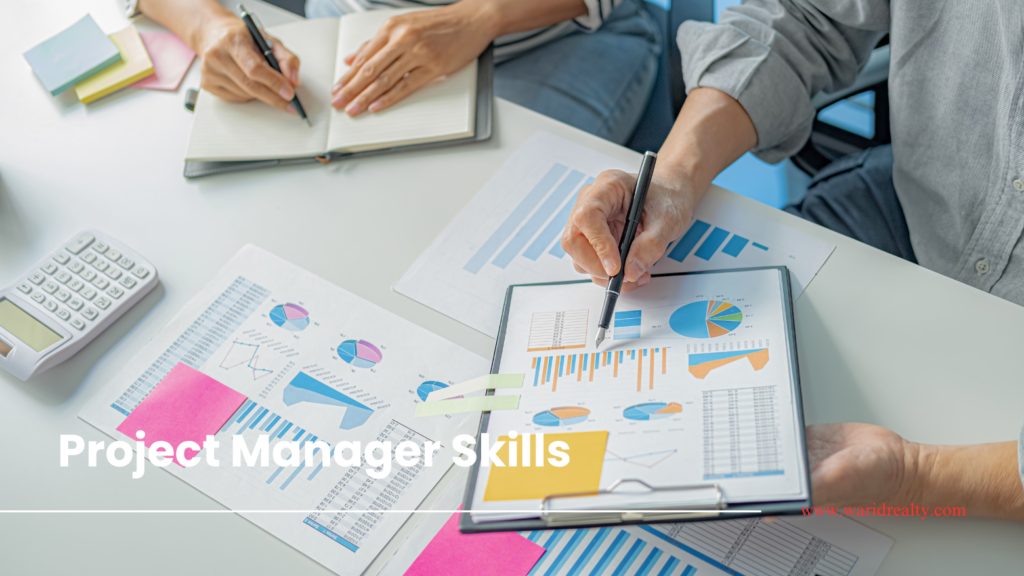
As I dug deeper, I noticed that becoming a successful project manager requires a strong combination of technical and soft skills. You cannot rely on just one area. You need both.
On the technical side, I found that project planning and scheduling are essential skills. A project manager must know how to break a project into tasks, assign durations, and create timelines. Budgeting and cost estimation are also important, especially in industries like construction and real estate.
I also realized the importance of tools. Learning software like Microsoft Project and Oracle Primavera P6 can make a big difference. These tools help you plan, schedule, and track projects effectively.
But what really surprised me was the importance of soft skills. Communication is probably the most critical skill. A project manager must explain ideas clearly, listen actively, and ensure everyone understands their roles.
Leadership is another key skill. You need to motivate your team, guide them through challenges, and keep them focused on goals. Decision-making also plays a major role. Projects often involve uncertainty, and you must make quick and informed decisions.
Problem-solving is something I found especially interesting. Every project faces unexpected issues, and a project manager must handle them calmly and efficiently.
In 2026, digital skills are also becoming essential. Understanding data, using analytics, and adapting to AI-driven tools can give you a strong advantage.
From what I have learned, success in project management comes from balancing technical knowledge with strong interpersonal skills. You need both to lead projects effectively.
Project Manager Salary

One of the main reasons I became interested in project management is the salary potential. I wanted to know if this career is financially rewarding.
In India, the salary range looks quite promising. Entry-level project managers usually earn between ₹6–8 LPA. As you gain experience, your salary increases significantly. Mid-level professionals can earn around ₹8–18 LPA, and senior project managers often earn ₹20 LPA or more.
What I found interesting is how much the industry matters. In IT and construction, project managers often earn higher salaries due to the complexity and scale of projects. Real estate is also a growing sector with good earning potential.
Globally, salaries are even higher. In countries like the USA and UK, project managers earn competitive salaries because of high demand and advanced project environments.
Certifications also play a big role in salary growth. For example, professionals with PMP Certification often earn more than those without certifications. Employers value certified professionals because they bring structured knowledge and proven skills.
From my perspective, project management offers strong financial growth if you continuously improve your skills and gain experience. It is not just about starting salary – it is about long-term growth.
Project Management Certifications (CAPM, PMP)

As I continued my research, I realized that certifications are a key part of building a career in project management. They help you stand out and show employers that you have the right knowledge.
The CAPM Certification is a great starting point. It is designed for beginners and helps you understand the fundamentals of project management. If you are just starting out, this certification can give you a strong foundation.
On the other hand, the PMP Certification is one of the most recognized certifications in the world. It is ideal for experienced professionals who want to take their careers to the next level.
I also came across Agile and Scrum certifications. These are useful for projects that require flexibility and quick adaptation.
What I liked about certifications is that they do more than improve your resume. They help you think like a project manager. They teach you structured approaches, best practices, and real-world problem-solving techniques.
From my point of view, investing in certifications is a smart decision if you are serious about this career. They increase your credibility, improve your knowledge, and open better job opportunities.
Project Management Tools (MS Project, Primavera)
As I explored further, I realized that tools are an essential part of project management. Without the right tools, managing complex projects becomes very difficult.
One of the most commonly used tools is Microsoft Project. It helps you create schedules, assign tasks, and track progress. I found it very useful for planning and monitoring projects.
Another powerful tool is Oracle Primavera P6. It is widely used in construction and large infrastructure projects. It allows detailed scheduling, resource allocation, and risk analysis.
There are also tools like Asana, Trello, and Jira that focus on team collaboration and task management.
In 2026, AI-powered tools are becoming more common. They help automate reporting, predict delays, and improve decision-making.
From my perspective, learning these tools is not optional – it is essential. If I want to work in real-world projects, I need to be comfortable using these tools.
Future of Project Management
When I look at the future, I see that project management is evolving rapidly. Technology is changing how projects are planned and executed.
Artificial Intelligence is becoming a major part of project management. It helps predict risks, optimize schedules, and improve decision-making. Automation reduces repetitive tasks and saves time.
Remote work is another big trend. Teams now work from different locations, which makes digital tools and communication more important than ever.
Data-driven decision-making is also gaining importance. Project managers use data to track performance, identify trends, and make better decisions.
Sustainability is another emerging trend, especially in construction and real estate. Projects now focus more on environmental impact and efficient resource use.
From what I understand, the future looks very promising. If I stay updated with new technologies and continue learning, project management can offer long-term growth and stability.
Challenges Faced by Project Managers

While project management offers many opportunities, it also comes with challenges. I realized this as I explored real-world scenarios.
One of the biggest challenges is managing time, cost, and quality at the same time. If one changes, it affects the others. Balancing these factors requires careful planning and constant monitoring.
Uncertainty is another challenge. Projects often face unexpected changes, delays, or risks. A project manager must stay flexible and adapt quickly.
Managing stakeholders can also be difficult. Different stakeholders have different expectations, and conflicts can arise. Strong communication helps resolve these issues.
Team management is another area where challenges appear. Working with diverse teams, especially remote teams, requires clear communication and coordination.
From my perspective, these challenges make the role more interesting. They require problem-solving, leadership, and quick thinking. A good project manager learns to handle these challenges effectively.
Project Management in Construction and Real Estate
Since I have a strong interest in construction and real estate, I found this area particularly relevant.
Project managers in this field handle planning, scheduling, procurement, and execution. They ensure that projects meet safety standards, quality requirements, and deadlines.
They also coordinate with contractors, architects, engineers, and clients. Managing multiple stakeholders makes this role both challenging and exciting.
Tools like Oracle Primavera P6 are widely used for construction scheduling. They help manage timelines, resources, and project progress.
I also noticed that cost control and contract management are very important in this industry. Projects involve large budgets, and even small mistakes can have significant impacts.
With rapid infrastructure development in India, this sector offers strong career opportunities. From my perspective, combining technical knowledge with project management skills can lead to a successful career in construction and real estate.
Conclusion
After exploring project management in detail, I can clearly see why it is one of the most popular careers in 2026. It offers growth, stability, and the opportunity to work on meaningful projects.
To succeed, I need to focus on building strong skills, learning tools like Microsoft Project and Oracle Primavera P6, and gaining certifications like PMP Certification.
The field is evolving with technology, and those who adapt will stay ahead. Continuous learning and skill development are essential.
From my perspective, project management is not just a job. It is a career that combines leadership, strategy, and problem-solving. If you are exploring this path, like I was, it is definitely worth considering in 2026.