Understanding the Project Life Cycle is essential as project management is the backbone of any successful project — whether it’s the construction of a commercial complex, the development of a new software system, or the execution of an interior fit-out. It ensures that every task is planned, executed, and controlled to meet defined goals within time, cost, and quality constraints.
Understanding the phases of a project — from initiation to closure — provides clarity, structure, and direction to all stakeholders. This article explores each phase in depth and includes key project management components such as the project charter, project documentation, management plans, risk registers, and more.
What Is a Project?
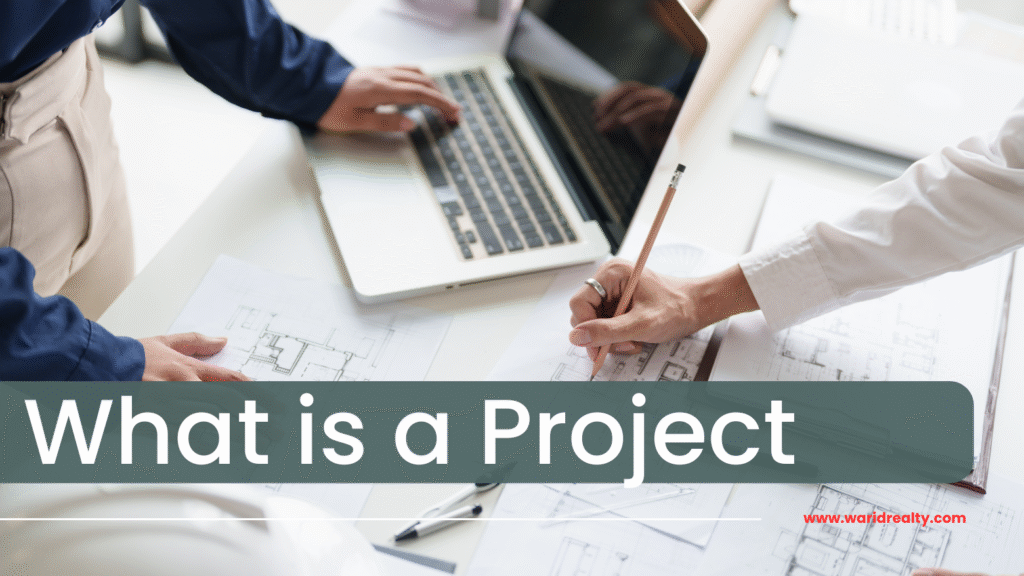
A project is a temporary endeavor undertaken to create a unique product, service, or result. It has a defined start and end date, specific objectives, and constraints in terms of time, cost, and resources.
For instance, constructing a hospital building or developing a mobile app are both projects because they aim to achieve a specific result within a defined timeframe.
Characteristics of a Project
- Temporary in nature
- Unique deliverables
- Progressive elaboration (clarity increases as the project progresses)
- Defined start and end
- Involves multiple stakeholders
Phases of a Project / Project Life Cycle
According to the PMI (Project Management Institute), the Project Management Lifecycle comprises five key phases:
- Initiation
- Planning
- Execution
- Monitoring and Controlling
- Closing
Let’s explore each phase of the project life cycle in detail.
Phase 1: Project Initiation
The Initiation Phase marks the beginning of a project. Its purpose is to define what the project will achieve and secure approval to proceed. It involves understanding the project’s business case, identifying stakeholders, and creating the Project Charter.
Key Steps in the Initiation Phase
- Developing the Business Case
The business case justifies why the project should be undertaken. It assesses expected benefits, costs, and alignment with organizational goals. - Identifying Stakeholders
Stakeholders are individuals or organizations affected by the project. Early identification helps in effective communication and management of expectations. - Developing the Project Charter
The Project Charter is a formal document that authorizes the project and provides the project manager with authority to use organizational resources.
Project Charter include:
- Project purpose and objectives
- Scope and deliverables
- High-level requirements
- Key stakeholders
- Roles and responsibilities
- Project manager details and authority level
- Key milestones and constraints
- Approval signatures
- Conducting Feasibility Studies
A feasibility study ensures the project is technically, economically, and legally viable before resources are committed.
Outputs of the Initiation Phase
- Approved Project Charter
- Stakeholder Register
- Feasibility Report
- Preliminary Risk Identification
- This phase ends with a “Go/No-Go” decision, determining whether the project should proceed.
Phase 2: Project Planning
Once the project is approved, detailed planning begins. The Planning Phase defines the “how” — how the project will be executed, monitored, and closed.
Purpose: To create a Project Management Plan that integrates all subsidiary plans and guides the project team.
Key Components of the Planning Phase
Defining Scope:
- Establishing project boundaries through a Scope Statement.
- Creating a Work Breakdown Structure (WBS) that divides the project into manageable tasks.
Developing the Schedule:
- Identifying activities, sequencing them, estimating durations, and developing a Gantt Chart or Network Diagram (AON or AOA).
- Tools like MS Project, Primavera P6, or CostX can assist in schedule management.
Cost Estimation and Budgeting:
- Using methods like analogous, parametric, or bottom-up estimation.
- The final budget is approved as the Cost Baseline.
Resource Planning:
- Identifying manpower, materials, and equipment requirements.
- Creating a Resource Histogram and allocation plan.
Risk Management Planning:
- Preparing a Risk Register to document potential risks, their impact, and mitigation strategies.
Communication Planning:
- Establishing how and when information will be shared among stakeholders through a Communication Matrix.
Procurement Planning:
- Deciding what will be procured externally and preparing bid documents or tendering strategies.
Quality Planning:
- Setting quality objectives, standards, and control procedures as part of the Quality Management Plan.
Developing the Project Management Plan:
- This comprehensive document integrates all subsidiary plans (scope, schedule, cost, risk, quality, communication, HR, procurement, etc.).
- It acts as a reference throughout the project lifecycle.
Outputs of the Planning Phase
- Project Management Plan
- Baselines (Scope, Schedule, Cost)
- Risk Register
- Stakeholder Engagement Plan
- Communication Plan
- Procurement Strategy
Phase 3: Project Execution
The Execution Phase is where the plans are put into action. Resources are mobilized, work is performed, and deliverables are created. This phase often consumes the most time and budget.
Key Activities
Team Development and Resource Allocation:
- Assigning roles, responsibilities, and ensuring team members understand the project goals.
- Conducting regular meetings and training if necessary.
Directing and Managing Project Work:
- Executing tasks as per the Project Management Plan.
- Ensuring adherence to standards and procedures.
Quality Assurance:
- Conducting audits and process evaluations to maintain desired quality levels.
Procurement and Contract Management:
- Coordinating with vendors, monitoring contract performance, and ensuring timely material delivery.
Stakeholder Engagement:
- Maintaining open communication channels and managing stakeholder expectations through updates and reports.
Implementing Change Requests:
- During execution, changes are inevitable. A Change Request may arise due to scope adjustments, unforeseen risks, or stakeholder demands.
- These are documented in a Change Log, reviewed by a Change Control Board (CCB), and formally approved or rejected.
Outputs of the Execution Phase
- Deliverables (Work in Progress or Completed)
- Change Requests
- Quality Reports
- Issue Log
- Updated Project Management Plan
Phase 4: Monitoring and Controlling
This phase runs parallel to execution and ensures the project stays aligned with the plan. The Monitoring and Controlling Phase involves tracking, reviewing, and regulating progress and performance.
Objectives
- Measure actual performance against planned objectives.
- Identify variances and implement corrective actions.
- Manage changes systematically.
Key Activities
Performance Measurement:
- Using tools like Earned Value Management (EVM) to track cost and schedule performance.
- CPI (Cost Performance Index) and SPI (Schedule Performance Index) are key indicators.
- Example:
- CPI = EV / AC
- SPI = EV / PV
Change Control:
- Managing all change requests and updating project baselines accordingly.
Risk Monitoring:
- Continuously updating the Risk Register as new risks emerge.
- Implementing mitigation plans promptly.
Quality Control:
- Conducting inspections, tests, and reviewing outputs against quality benchmarks.
Issue Tracking:
- Maintaining an Issue Log to document and resolve problems.
Progress Reporting:
- Preparing Status Reports, Dashboards, or Performance Charts for stakeholders.
Outputs of the Monitoring and Controlling Phase
- Updated Project Documentation
- Performance Reports
- Approved Change Requests
- Forecasts (Time, Cost, Risk)
- Lessons Learned Register
Monitoring and controlling ensure that deviations are detected early and corrected efficiently.
Phase 5: Project Closing
The Closing Phase signifies the formal completion of the project. Deliverables are handed over, resources are released, and final documentation is completed.
Key Activities
Final Deliverable Handover:
- Ensuring that the client or end user formally accepts the deliverables.
Contract Closure:
- Settling all financial obligations, completing procurement documentation, and closing contracts with vendors.
Performance Evaluation:
- Conducting post-project reviews to assess what worked well and what didn’t.
Lessons Learned:
- Documenting insights for future projects. This forms part of the Organizational Process Assets (OPA).
Archiving Project Documents:
- Storing all reports, drawings, contracts, and approvals for reference and audit.
Team Recognition:
- Appreciating team efforts and celebrating achievements.
Outputs of the Closing Phase
- Accepted Deliverables
- Final Report
- Lessons Learned Register
- Updated Organizational Assets
- Release of Resources
Project closure marks the transition from a temporary project to operational use or maintenance.
The project life cycle consists of the five above phases.
Difference Between Project, Program, and Portfolio
| Term | Meaning | Example |
| Project | A single temporary effort with a specific goal. | Constructing a hospital. |
| Program | A group of related projects managed together for better coordination. | Managing several hospital projects under one healthcare scheme. |
| Portfolio | A collection of projects and programs aligned with organizational goals. | Managing all infrastructure and healthcare initiatives of a company. |
Project Life Cycle (FAQ)
Monitoring tracks project performance and progress, while controlling involves taking corrective actions when deviations occur. Together, they help maintain alignment with project objectives.
Project managers often use tools like MS Project, Primavera P6, Excel dashboards, and Power BI for tracking schedules, budgets, and progress. In construction, software such as CostX, Revit, or Autodesk tools are common.
Stakeholder management involves identifying all parties interested in or affected by the project and managing their expectations through effective communication. Satisfied stakeholders are key to project success.
Also read,
- Agile Project Management: Guide 2025
- Waterfall Methodology: Guide 2025
- Project Management Interview Questions: 21 Best
3 thoughts on “Project Life Cycle: Phases of Project (Best Guide)”