The procurement process is a core business function that supports projects and daily operations. It ensures that organizations acquire goods and services in a planned, transparent, and cost-effective way.
If someone ask, procurement what is it? In simple terms, procurement means obtaining what an organization needs to function or complete a project. However, it is not limited to purchasing. It also involves planning, supplier evaluation, contract negotiation, and performance monitoring.
The formal procurement definition describes it as a structured process of sourcing, selecting, and managing suppliers to achieve best value while meeting quality and time requirements.
A well-managed procurement system reduces waste, avoids legal issues, and improves accountability. It also supports strategic goals by linking purchasing decisions with budgets and schedules.
In modern organizations, the procurement process relies on digital tools, clear policies, and trained professionals. Whether in construction, manufacturing, or services, procurement affects cost, risk, and reputation. By the end, you will clearly understand procurement and its importance in business and project success.
Estimated reading time: 12 minutes
Key Takeaways
- The procurement process is crucial for acquiring goods and services efficiently, involving planning, supplier evaluation, and contract management.
- A structured procurement life cycle helps organizations standardize activities, improve accountability, and reduce risks associated with procurement.
- Effective procurement management enhances organizational performance, controls spending, and ensures timely delivery of resources.
- Understanding different types of procurement contracts, such as fixed-price and cost-reimbursable, aids in better risk management and negotiation.
- Utilizing procurement software streamlines processes, improves visibility, and supports compliance with rules and policies.
Procurement Management Process
To understand procurement clearly, we must first focus on the procurement definition. Procurement is the systematic process of identifying needs, selecting suppliers, negotiating terms, and managing the delivery of goods or services.
When people ask, what is procurement, the answer goes beyond buying. It includes decision-making, documentation, and relationship management.
Procurement management ensures that organizations purchase items at the right quality, quantity, time, and price. It also ensures compliance with legal, financial, and ethical standards. A structured procurement process helps organizations reduce risks related to supplier failure, cost escalation, and contract disputes.
Procurement management also plays a strategic role. It supports budgeting by controlling spending and improves planning by aligning purchases with project schedules. It encourages competition through fair bidding and vendor evaluation. In addition, it builds long-term supplier partnerships that improve reliability and innovation.
Without proper procurement management, organizations face delays, poor-quality materials, and financial losses. Clear procurement policies and trained teams prevent such problems.
In today’s digital age, procurement management also integrates technology for approvals, reporting, and tracking. Thus, procurement management acts as a bridge between organizational needs and external suppliers while ensuring efficiency and transparency.
Procurement Life Cycle Explained
The procurement life cycle represents the complete journey of procurement activities from the recognition of a need to the closure of a contract. It provides a structured framework for executing the procurement process in an organized way. Each stage plays a specific role and ensures continuity and control.
The life cycle begins when a department identifies a requirement. It continues through planning, supplier selection, contracting, and contract administration. Finally, it ends with contract closure and performance evaluation. This cycle helps organizations standardize their procurement activities and reduce errors caused by unplanned purchases.
A clear procurement life cycle also supports accountability. Each stage assigns responsibilities and defines documentation needs. This improves auditability and ensures that procurement follows financial rules and ethical standards. It also improves coordination between technical teams, finance departments, and suppliers.
By following the procurement life cycle, organizations avoid rushed decisions and ensure fair competition among vendors. It also improves cost forecasting and quality control.
The life cycle acts as a guide for managers to monitor progress and identify risks early. In short, the procurement life cycle transforms procurement from a reactive activity into a strategic and controlled business function.
Key Phases of the Procurement Life Cycle
The procurement life cycle consists of several key phases that together form a complete procurement process. Each phase ensures that procurement activities remain systematic and transparent.
The first phase is need identification, where the organization defines what it requires in terms of quantity, quality, and specifications. The second phase is procurement planning, which includes budgeting, selecting procurement methods, and scheduling purchases.
The third phase is supplier selection. In this stage, organizations invite bids or proposals and evaluate vendors based on price, experience, technical capability, and delivery time. The fourth phase is contract award, where the buyer selects the most suitable supplier and finalizes contract terms.
The fifth phase is contract administration. This phase involves monitoring supplier performance, managing payments, and controlling changes in scope or cost. The final phase is contract closure. In this stage, the organization completes final payments, verifies deliverables, and evaluates supplier performance for future reference.
These phases work together to maintain discipline in the procurement process. They prevent unauthorized purchases and promote value for money. A structured approach also helps organizations manage risks, improve documentation, and strengthen supplier relationships. Each phase supports better planning and more informed decision-making.
Importance of Effective Procurement Management
Effective procurement management improves organizational performance and project outcomes. A strong procurement process ensures that resources are available when needed and within budget. It also prevents delays caused by late deliveries or poor supplier performance.
Clear procurement definition and policies reduce confusion among teams. They help staff understand roles, responsibilities, and approval limits. This improves coordination between procurement, finance, and technical departments.
Procurement management also supports risk control. It reduces dependency on unreliable suppliers and ensures contracts protect organizational interests. Proper evaluation and documentation prevent fraud and favoritism. In addition, effective procurement promotes sustainability by encouraging ethical sourcing and fair competition.
Financially, procurement management controls spending and improves cash flow. Negotiated contracts and bulk purchasing reduce costs. Strategically, it supports long-term planning by aligning supplier selection with business objectives.
In modern organizations, procurement is no longer just a support function. It influences competitiveness and reputation. A well-managed procurement system improves trust among stakeholders and ensures compliance with laws and standards. Therefore, effective procurement management acts as a foundation for efficiency, accountability, and growth.
Types of Procurement Contracts
Procurement contracts define how buyers and sellers share risks, responsibilities, and payments. They form a critical part of the procurement process because they establish legal and financial relationships. Selecting the correct contract type improves cost control and performance.
The main types of procurement contracts include fixed-price contracts, cost-reimbursable contracts, and time and materials contracts. Each type suits different project conditions and levels of uncertainty.
- Fixed-price contracts suit projects with clear scope and stable requirements. Cost-reimbursable contracts work well when scope is uncertain and innovation is required. Time and materials contracts suit short-term or flexible tasks where exact quantities cannot be defined in advance.
Understanding contract types also improves negotiation and risk allocation. Buyers use contracts to protect budgets and timelines. Sellers use them to ensure fair compensation. Clear contract terms prevent disputes and misunderstandings.
In procurement management, contract selection must match project complexity and risk level. A mismatch leads to cost overruns and conflicts. Therefore, knowledge of contract types strengthens decision-making and improves the effectiveness of the procurement system.
Fixed-Price Contracts vs. Cost-Reimbursable Contracts
Fixed-price and cost-reimbursable contracts represent two opposite approaches in the procurement process. In fixed-price contracts, the buyer agrees to pay a predetermined amount for the work. This approach suits projects with defined scope and stable market conditions. It shifts most cost risk to the seller and motivates efficiency.
Cost-reimbursable contracts operate differently. The buyer reimburses actual costs and adds a fee or profit. This type suits projects with uncertain scope, such as research or innovative design. It allows flexibility and encourages collaboration.
However, cost-reimbursable contracts demand strong cost monitoring and reporting. Without control, expenses may rise beyond expectations. Fixed-price contracts, on the other hand, require accurate cost estimation at the start. Errors in estimation can lead to disputes or poor quality.
Both contract types serve important roles in procurement management. Buyers select them based on project clarity, risk tolerance, and market stability. Understanding their differences helps organizations avoid financial loss and improve contract performance.
Time and Materials Contracts: When to Use Them
Time and materials contracts combine features of fixed-price and cost-reimbursable contracts. They pay suppliers based on actual time spent and materials used. Organizations use them when they cannot define scope accurately at the beginning of the procurement process.
This contract type suits maintenance work, consultancy services, and emergency repairs. It offers flexibility and allows work to begin quickly. It also supports projects where tasks evolve over time.
However, time and materials contracts require close supervision. Without proper tracking, costs can increase rapidly. Buyers must monitor working hours, approve materials, and review invoices carefully.
These contracts also demand clear rate definitions and spending limits. Setting maximum cost ceilings helps control budgets. With proper controls, time and materials contracts provide adaptability without sacrificing accountability.
Thus, organizations use this contract type when speed and flexibility matter more than cost certainty. It fills the gap between fixed-price and cost-reimbursable models.
Best Practices for Managing Procurement Contracts
Strong contract management ensures that the procurement process delivers value and avoids disputes. One key practice is defining scope, roles, and responsibilities clearly in the contract. This prevents misunderstandings and performance issues.
Another best practice is maintaining regular communication with suppliers. Meetings and progress reports help identify problems early. Performance tracking through key indicators such as cost, time, and quality improves control.
Documentation also plays a major role. Recording changes and approvals protects both buyer and seller. It also supports audits and legal compliance.
Regular contract reviews ensure that terms remain relevant. They help organizations respond to market changes and project risks. Training procurement staff in negotiation and contract law also strengthens outcomes.
By following these practices, organizations improve transparency, reduce risks, and strengthen supplier relationships. Effective contract management transforms procurement from a transactional activity into a strategic partnership.
Challenges in Procurement Management
Procurement management faces several challenges that affect performance and reliability. Supplier delays and price volatility create uncertainty. Poor-quality materials increase rework and costs.
Weak documentation and unclear specifications also disrupt the procurement process. They cause disputes and delays. Limited use of technology slows approvals and reporting.
Another challenge is resistance to change. Staff may prefer informal purchasing instead of structured systems. This reduces transparency and accountability.
Organizations must address these issues through training, planning, and automation. Clear policies and digital tools reduce errors and improve efficiency. Strong leadership ensures compliance and discipline.
By identifying and managing these challenges, organizations protect budgets and timelines. They also improve trust among stakeholders and suppliers.
Procurement Software
Zoho Procurement
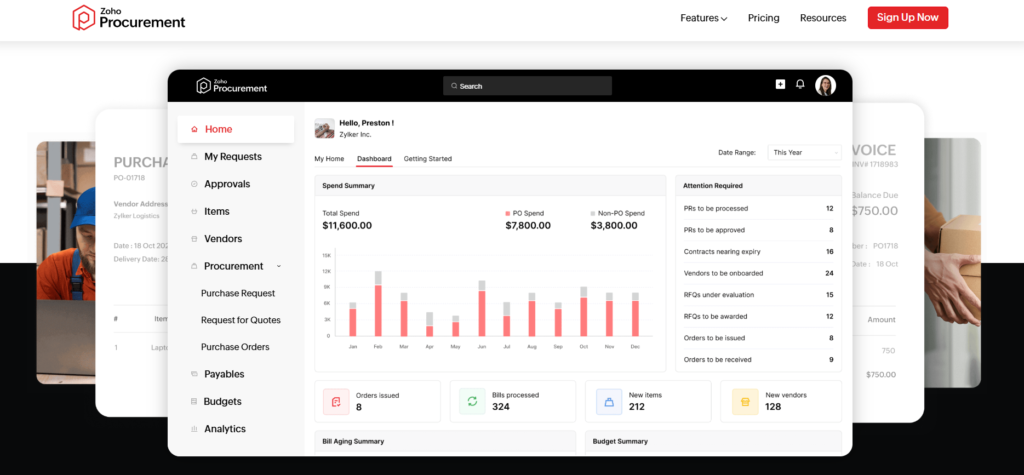
Zoho Procurement helps organizations manage the procurement process in a simple and organized way. It allows users to create purchase requests, get approvals, and issue purchase orders from one platform. The software automates routine tasks, which reduces manual work and human errors.
Zoho Procurement also supports supplier management. Users can store vendor details, track supplier performance, and compare prices easily. The system provides real-time visibility of spending, which helps control budgets and avoid unnecessary purchases.
Another key feature is easy integration with accounting and inventory systems. This ensures smooth data flow between departments. Zoho also offers reports and dashboards that help managers make quick decisions. Because of its user-friendly design and affordable pricing, Zoho Procurement suits small and medium-sized organizations looking for efficient digital procurement solutions.
SAP Ariba
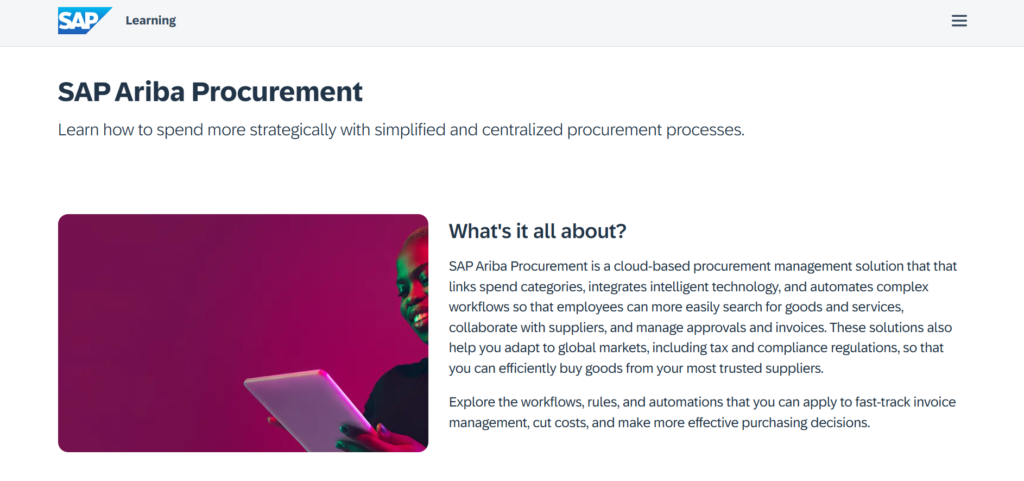
SAP Ariba is a powerful cloud-based platform that supports end-to-end procurement activities. It helps organizations manage sourcing, contracts, purchasing, and invoicing through a single system. SAP Ariba connects buyers with a large global supplier network, which improves competition and transparency.
One key feature of SAP Ariba is strategic sourcing. It allows users to run online bidding, compare supplier offers, and select the best vendor. The platform also supports contract lifecycle management, which helps track compliance and renewals.
SAP Ariba improves spend visibility through advanced analytics and reporting tools. It also supports compliance with procurement policies and global standards. Large organizations prefer SAP Ariba because it handles complex procurement processes, high transaction volumes, and international supplier relationships efficiently.
Conclusion: Procurement Management
Procurement management plays a critical role in ensuring organizational efficiency and project success. A well-defined procurement process helps organizations plan purchases, control costs, and maintain quality standards. When teams clearly understand the procurement definition, they move beyond simple buying and focus on value, transparency, and risk control.
Effective procurement management supports timely delivery of goods and services. It reduces delays, prevents cost overruns, and strengthens supplier relationships. By following the procurement life cycle, organizations create a structured approach that improves accountability and decision-making at every stage. Choosing the right contract type further helps in balancing risk and cost while meeting project requirements.
Modern procurement management also relies on digital tools and data-driven decisions. Procurement software improves visibility, speeds up approvals, and ensures compliance with policies. These systems reduce manual effort and support better planning.
In today’s competitive environment, organizations cannot afford weak procurement practices. Strong procurement management improves efficiency, ensures fairness, and supports long-term growth. It transforms procurement into a strategic function that adds real value to projects and business operations.
Procurement Process & Life Cycle FAQs
Procurement is defined as the process of sourcing, selecting, contracting, and managing suppliers to obtain goods or services. It ensures the right quality, quantity, price, and delivery while following legal and organizational rules.
The procurement life cycle is the sequence of steps followed from identifying a need to closing a contract. It provides a clear framework that helps organizations plan, execute, and monitor procurement activities efficiently.
Procurement supports transparency by using clear procedures, documented approvals, and competitive bidding. This reduces favoritism and fraud and builds trust among stakeholders and suppliers.
Procurement improves project delivery by ensuring timely availability of materials and services. It reduces delays, controls cost, and maintains quality, which supports smooth project execution.
Also read,
- Project Life Cycle: Phases Of a Project (Guide)
- Employee Management Software: Best 3 Save (Time and Money)