PMI is a globally respected organization that sets standards for project, program, and portfolio management. Its certifications validate both knowledge and real-world skills. They also align with modern project approaches such as Adaptive, Hybrid, and Predictive methods. PMI certifications do not only help you pass an exam. They help you think like a project leader and work like a business professional.
Employers now prefer candidates who can prove their abilities through recognized credentials. This is where certifications from Project Management Institute (PMI) play a vital role.
In this guide, you will learn about the core PMI certifications in 2026. You will understand their importance in career growth. You will also explore each certification in detail, including eligibility, exam pattern, maintenance requirements, and career benefits. This guide will help you choose the right certification based on your experience and long-term goals.
Estimated reading time: 10 minutes
Key Takeaways
- In 2026, Project Management Institute (PMI) certifications are crucial for career growth as they combine technical knowledge with professional credibility.
- PMI offers various core certifications like CAPM, PMP, PgMP, and PfMP to support professionals at different career stages.
- These certifications enhance job prospects, increase earning potential, and facilitate career mobility across industries.
- Long-term career stability is ensured through ongoing learning and renewal requirements associated with PMI certifications.
- Membership in PMI provides valuable resources, networking opportunities, and helps reduce costs associated with certification exams.
Importance of PMI Certifications in Career Growth
PMI certifications strongly influence career growth because they combine technical knowledge with professional credibility. When recruiters see a PMI credential on your resume, they immediately recognize that you follow international project management standards. This recognition builds trust even before the interview begins.
These certifications help professionals move faster into leadership roles. Many organizations now promote certified employees earlier because they demonstrate structured thinking and decision-making skills.
PMI certifications also improve salary potential. Studies consistently show that certified project managers earn higher income than non-certified peers. This happens because companies value risk reduction and predictable performance.
PMI certifications also support career mobility. A civil engineer can move into project management. An IT professional can manage cross-functional teams. A business graduate can handle large programs. The certification creates a common professional language across industries.
Another major benefit is long-term career stability. Project-based work will continue to expand in sectors such as construction, renewable energy, healthcare, software, and finance.
PMI certifications keep your skills relevant and aligned with market needs. They also encourage continuous learning through renewal requirements, which keeps professionals updated with changing practices.
Overview of PMI Core Certification Types
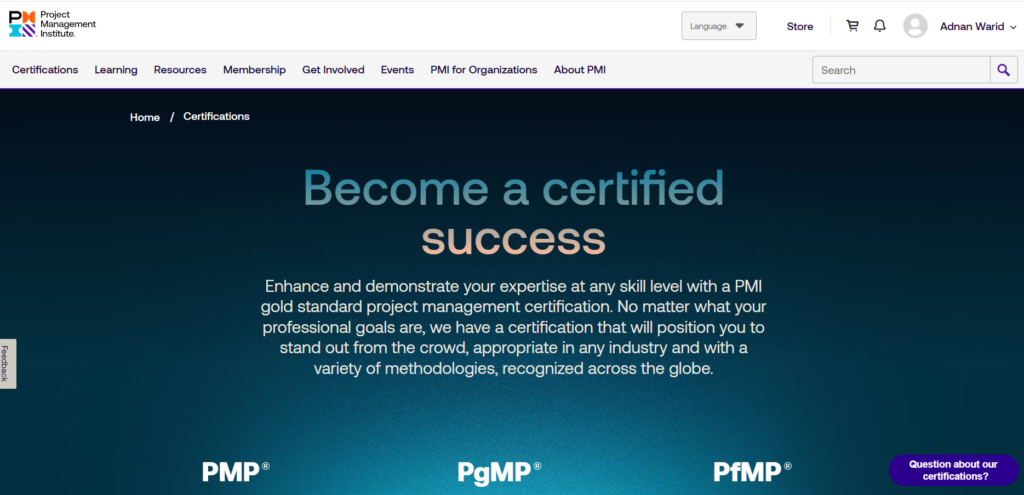
The core certifications offered by Project Management Institute (PMI) support professionals at different stages of their careers.
PMI designs these certifications to build skills progressively, from entry-level knowledge to executive decision-making.
The Certified Associate in Project Management (CAPM) suits students and beginners who want to learn project fundamentals.
The Project Management Professional (PMP) certification targets experienced practitioners who manage teams and deliver complex projects.
The Program Management Professional (PgMP) focuses on coordinating multiple related projects to achieve strategic goals.
The Portfolio Management Professional (PfMP) prepares senior professionals to select and manage the right mix of projects and programs for maximum business value. Together, these certifications create a clear learning path that helps professionals grow from technical roles to leadership and strategic positions.
Certified Associate in Project Management (CAPM)
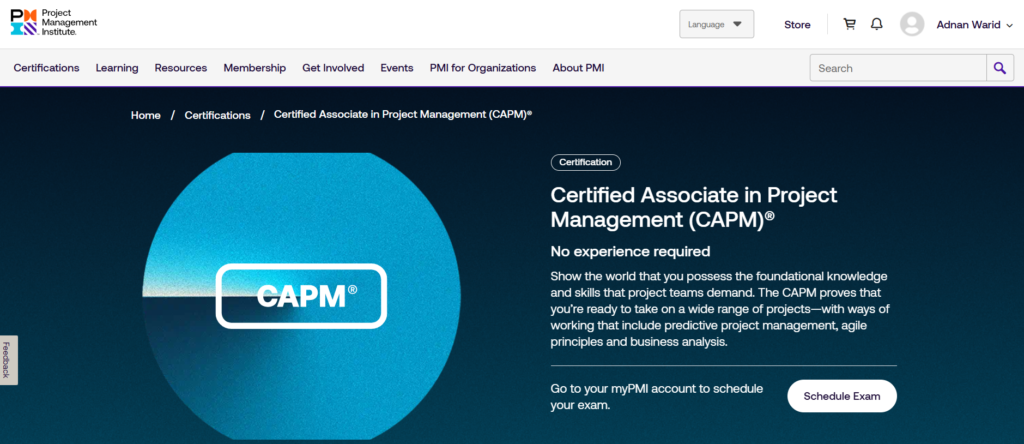
CAPM is an entry-level certification designed for students and early-career professionals who want to enter the field of project management.
Eligibility Criteria:
To apply for CAPM, you must hold a secondary degree such as a high school diploma or equivalent. You also need 23 hours of project management education. These hours can come from training programs, online courses, or academic programs.
Exam Pattern:
The CAPM exam contains 150 multiple-choice questions. The questions test your understanding of four main areas:
- Project management fundamentals and core concepts
- Predictive and plan-based methodologies
- Agile frameworks and methods
- Business analysis frameworks
The exam focuses on practical understanding rather than memorization. It checks whether you can identify project roles, recognize risks, and choose suitable approaches for different scenarios.
How to Maintain CAPM:
CAPM certification remains valid for three years. To renew it, you must earn Professional Development Units (PDUs) under PMI’s Continuing Certification Requirements program. This process ensures that you keep learning and improving your skills.
Career Growth with CAPM:
CAPM builds your foundation in project management. It helps you qualify for roles such as project coordinator, junior project manager, site engineer, or assistant project officer. It also strengthens your resume when applying for internships or entry-level jobs. CAPM prepares you for the PMP certification later in your career.
Project Management Professional (PMP) Certification
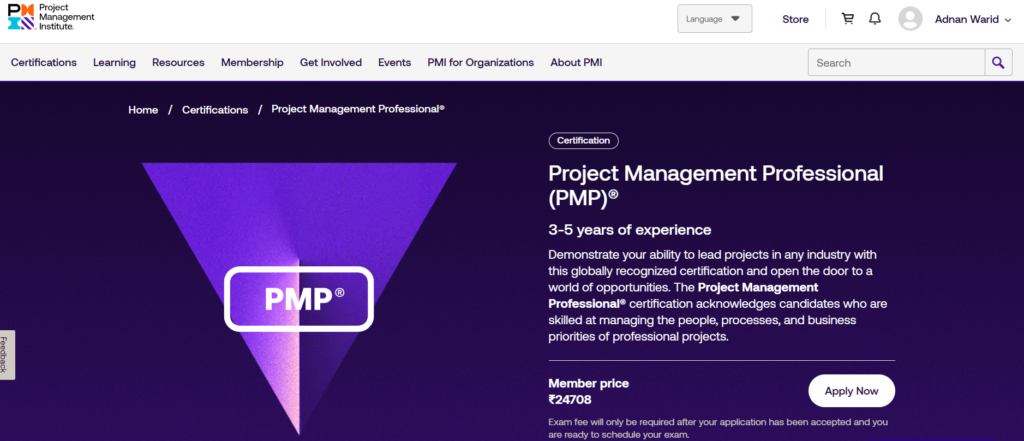
PMP is the most popular and respected PMI certification worldwide. It suits professionals who already manage projects and want to advance their careers.
Eligibility Criteria
You can qualify in one of three ways:
- A secondary degree with 60 months of project management experience
- A four-year degree with 36 months of project management experience
- A degree from a PMI-accredited program with 24 months of experience
In all cases, you also need 35 hours of project management education unless you already hold CAPM.
Exam Pattern
The PMP exam includes 180 questions. It covers three domains:
- People (team leadership and stakeholder management)
- Process (technical project management practices)
- Business environment (organizational strategy and compliance)
About half of the questions focus on Agile and Hybrid approaches. The exam uses scenario-based questions that test your judgment and leadership skills.
How to Maintain PMP
You must earn 60 PDUs every three years to maintain your PMP status. PDUs come from training programs, webinars, teaching, or professional service activities.
Career Growth with PMP
PMP helps professionals move into roles such as project manager, senior project manager, construction project lead, or IT delivery manager. It improves your chances of working in multinational companies. It also opens doors to leadership positions in PMOs and consulting firms.
Program Management Professional (PgMP)
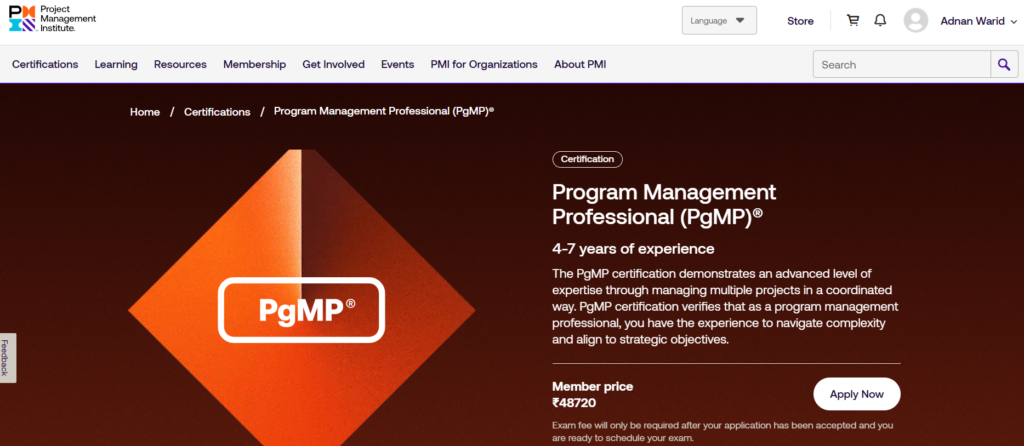
PgMP focuses on managing multiple related projects that together deliver strategic business value.
Eligibility Criteria
You must demonstrate experience in both project management and program management. PMI evaluates your professional background before allowing you to take the exam.
Exam Pattern
The PgMP exam focuses on five domains:
- Strategic program alignment
- Program life cycle management
- Benefits management
- Stakeholder engagement
- Governance
The questions assess your ability to align programs with business strategy and manage complexity across projects.
How to Maintain PgMP
You must earn PDUs regularly to maintain your credential under PMI’s renewal system.
Career Growth with PgMP
PgMP helps professionals transition into program manager or transformation manager roles. It suits leaders who manage large initiatives such as infrastructure development, enterprise IT systems, or organizational restructuring.
Portfolio Management Professional (PfMP)
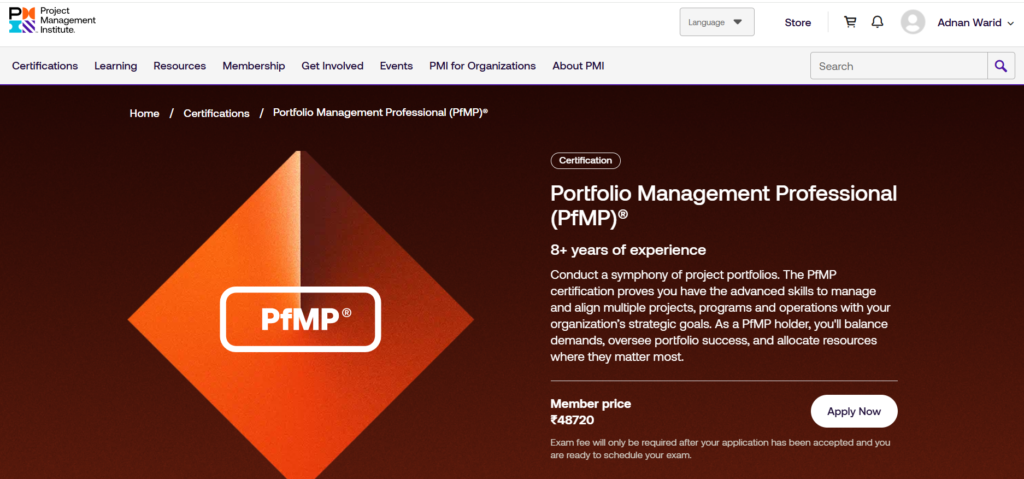
PfMP is the highest-level PMI certification. It focuses on selecting and managing the right mix of projects and programs.
Eligibility Criteria
You need extensive experience in portfolio-level decision-making and strategy alignment.
Exam Pattern
The PfMP exam includes domains such as:
- Strategic alignment
- Governance
- Portfolio performance
- Risk management
- Communication management
The exam tests your ability to prioritize investments and maximize organizational value.
How to Maintain PfMP
You must renew the certification using PDUs through PMI’s CCR program.
Career Growth with PfMP
PfMP prepares you for executive roles such as portfolio manager, PMO director, or strategy head. It proves your ability to guide organizational investment decisions.
Steps to Prepare for PMI Certification Exams
Preparing for PMI certification exams requires a clear strategy and consistent effort. First, choose the certification that matches your experience level and career goals, whether it is CAPM, PMP, PgMP, or PfMP. Next, download and study the official exam content outline provided by Project Management Institute (PMI).
This outline defines what the exam will test and helps you avoid wasting time on irrelevant topics. Create a realistic study plan by dividing the syllabus into weekly targets and fixing daily study hours.
Focus on understanding concepts such as project life cycles, risk management, stakeholder engagement, and Agile practices instead of memorizing definitions. Use reliable study materials like PMI guides, mock exams, and online training programs.
Practice scenario-based questions regularly to improve decision-making skills and time management. Join online forums or study groups to exchange ideas and clarify doubts. Revise weak areas every week and track your progress through practice tests.
In the final weeks, focus on revision rather than learning new topics. This structured approach builds confidence and increases your chances of passing the exam on the first attempt.
Benefits of PMI Membership
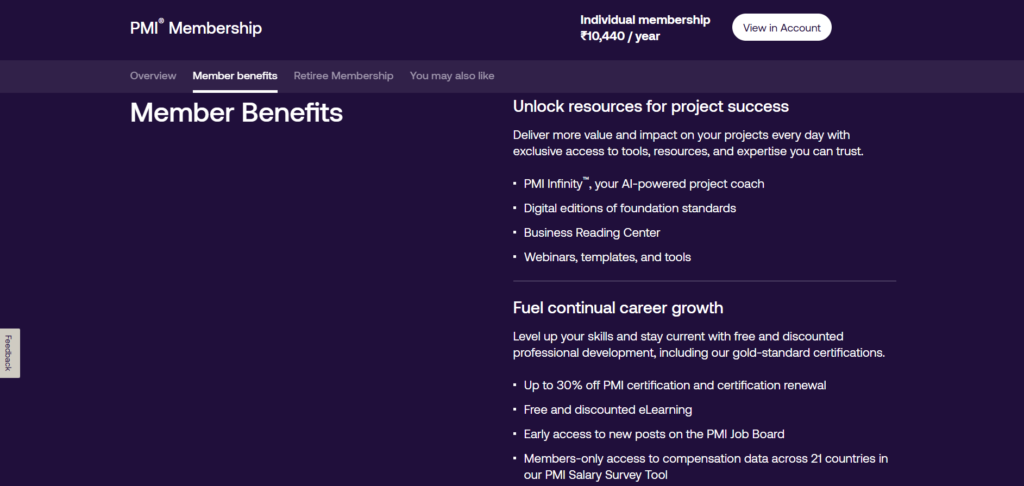
- Membership in Project Management Institute (PMI) reduces certification exam fees and renewal charges, making professional growth more affordable over time.
- Members get access to official digital resources, including standards, guides, and research papers that support exam preparation and practical project work.
- PMI membership makes it easier to earn Professional Development Units (PDUs) through webinars, online courses, and knowledge-sharing sessions required for certification renewal.
- It provides opportunities to join local PMI chapters and global communities, helping professionals expand their network and learn from experienced project managers.
- Members can attend PMI events, workshops, and conferences at discounted rates, which improves learning and professional visibility.
- PMI membership strengthens professional credibility by showing commitment to continuous learning and ethical project management practices.
- It helps professionals stay updated with new project management trends such as Agile, Hybrid, and digital transformation practices.
- Members gain access to career tools, job boards, and mentoring programs that support long-term career advancement.
PMI Certifications (Conclusion)
PMI certifications create a structured and reliable pathway for long-term career growth in project management. They help professionals develop strong technical knowledge, leadership skills, and strategic thinking abilities.
Starting with an entry-level certification and progressing toward advanced credentials allows individuals to grow step by step with experience.
These certifications improve job prospects, increase earning potential, and build professional credibility across industries. They also prepare professionals to handle complex projects, manage teams, and align work with business objectives. Continuous learning through certification renewal ensures that skills remain relevant in a changing work environment.
PMI certifications do not only validate what you already know. They also shape how you approach problems, make decisions, and lead teams. Here, PMI provides for different professionals-
- Students, they provide a strong foundation.
- Working professionals, they open doors to senior roles.
- Leaders, they support strategic and portfolio-level responsibilities.
By investing time and effort in PMI certifications, you invest in a future-ready career. Taking the next step with PMI means choosing growth, recognition, and professional confidence in an increasingly project-driven world.
Project Management Institute FAQs
The Certified Associate in Project Management (CAPM) is best for beginners. It suits students and entry-level professionals who want to learn project management fundamentals. CAPM builds a strong base in predictive, Agile, and business analysis concepts before moving to advanced certifications.
Yes, PMI certifications require renewal every three years. Certified professionals must earn Professional Development Units (PDUs) through learning and professional activities. This process ensures continuous skill development and keeps certification holders updated with modern practices.
Yes, PMI membership provides access to learning materials, webinars, and digital resources. Members also receive discounts on exam fees. These benefits make preparation easier and more affordable while supporting continuous professional development.
A typical career path starts with CAPM, progresses to PMP, and later advances to PgMP or PfMP. This structured path supports growth from entry-level project roles to senior leadership and strategic decision-making positions.
Also read,
- Certified Associate in Project Management: CAPM Guide 2026
- Project Management Professionals: PMP Guide 2026
- Project Management Software: Monday Review 2026
- Employee Management Software: Best 3 Save (Time and Money)